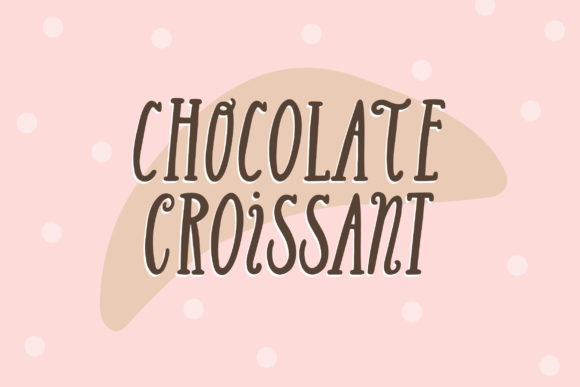
Chocolate Croissant: The Display Font with Character
There's a reason some fonts feel like they have a personality before you even type a word. Chocolate Croissant is one of those typefaces—it carries a certain warmth, a touch of elegance, and a boldness that makes it impossible to ignore. If you've been scrolling through font libraries looking for something that feels modern yet timeless, playful yet professional, this display font might be exactly what your next project needs.
A Typeface That Balances Style and Substance
What sets Chocolate Croissant apart from the hundreds of display fonts competing for your attention? It starts with its visual DNA. The letterforms have a confident, slightly condensed structure that reads well at large sizes—exactly what you want from a headline font. The strokes carry enough weight to command attention without feeling heavy or cluttered. There's a subtle sophistication baked into the curves and terminals that gives it versatility across different design contexts.
Unlike overly decorative typefaces that lock you into one aesthetic, Chocolate Croissant works across a surprisingly wide range of creative directions. It can lean editorial when paired with clean sans serifs, or it can feel approachable and brand-friendly when used alongside softer companion fonts. That flexibility matters when you're building a visual identity that needs to work across multiple touchpoints—from a website header to a printed poster to a social media carousel.
Where This Font Truly Shines
Let's talk about real-world applications, because that's where any font earns its value. If you're designing a logo for a boutique brand, a coffee shop, a lifestyle label, or a creative studio, Chocolate Croissant offers that ideal balance between distinctiveness and readability. Logotype design is one of the trickiest areas in typography—you need something memorable but not gimmicky, stylish but not trend-dependent. This typeface threads that needle well.
For packaging design, especially in the food, beauty, or artisan product space, the font's name hints at its vibe: warm, crafted, and inviting. Imagine it on a chocolate bar wrapper, a candle label, or a skincare box. The character of the letterforms communicates quality and care, which is exactly the message most brands want to send through their packaging.
Poster design and editorial layouts are another natural fit. When you need a headline that grabs attention from across a room or across a page, a strong display font does the heavy lifting. Chocolate Croissant handles that responsibility with confidence, whether you're working on a magazine cover, a book title treatment, or event promotional materials.
Building Brand Identity with Intentional Typography
Typography is one of the most underrated tools in brand building. People often focus on color palettes and imagery, but the fonts you choose carry enormous weight in how your brand is perceived. A premium font like Chocolate Croissant signals intentionality—it tells your audience that every detail has been considered.
Visual consistency across platforms is easier to achieve when you have a typeface that performs well in multiple contexts. Social media graphics, website banners, email headers, business cards, merchandise—when the same font carries your brand voice across all of these, recognition builds faster. Your audience starts associating that specific typographic personality with your brand, even before they read the words.
For small business owners and entrepreneurs who are building their brand identity from scratch, choosing a display font with strong character is a strategic move. It gives your visual communication a foundation that feels cohesive and professional, even if you're working with a lean budget and limited design resources.
Practical Tips for Using Display Fonts Effectively
Having a great display font is only half the equation. Using it well is where the real skill comes in. Here are some practical considerations to keep in mind when working with Chocolate Croissant or any headline typeface:
Pair it wisely. A display font needs breathing room. Pair Chocolate Croissant with a clean, neutral body font—a simple sans serif or a classic serif works beautifully. The contrast creates hierarchy and keeps your layouts from feeling visually overwhelming. Think of the display font as the main character and the body font as the supporting cast.
Mind your sizing. Display fonts are designed to perform at larger sizes. Using them for body copy or small text blocks will almost always hurt readability. Reserve Chocolate Croissant for headlines, titles, pull quotes, and other prominent text elements where its personality can come through without sacrificing legibility.
Test before you commit. Before rolling a font out across your entire brand system, test it in context. Set your actual headlines, not just random placeholder text. Check how it looks on both screen and print. See how it behaves at different sizes. Does it still feel right when you're designing an Instagram story versus a printed flyer?
Review the full font family. Many premium fonts come with multiple weights, styles, or alternates. Take time to explore everything included in the package. You might discover a stylistic alternate that perfectly suits your logo, or a weight variation that works better for a specific application than the one you initially planned to use.
From Digital Screens to Printed Materials
One of the challenges designers face today is choosing typography that translates well between digital and physical formats. A font that looks stunning on a high-resolution screen can sometimes fall flat in print, or vice versa. Chocolate Croissant holds up across both environments, which makes it a practical choice for projects that live in multiple spaces.
Think about content creators and YouTubers who need eye-catching thumbnail text and channel branding, but also want the option to sell printed merchandise or produce physical marketing materials. Or consider a small business owner who needs their website, business cards, product tags, and storefront signage to feel like they belong to the same brand. A versatile display font simplifies that entire process.
For bloggers and digital publishers, the right headline font can improve the overall reading experience. It sets the tone for your content before someone decides whether to keep reading. A well-chosen typeface like Chocolate Croissant adds visual interest to your layout without distracting from your message—exactly the balance good editorial design requires.
Licensing and the Business of Fonts
One practical detail that often gets overlooked: make sure you understand the licensing terms before using any font in commercial projects. If you're designing for a client, selling products with the font, or using it in monetized content, you need a commercial license. Most premium font designers and foundries offer clear licensing options—desktop, web, app, and extended licenses depending on your use case.
Investing in properly licensed, high-quality typography is one of the most cost-effective design decisions you can make. Compared to custom lettering or a full rebrand, a well-chosen display font gives you professional-grade typographic character at a fraction of the cost. It's a design asset that keeps paying dividends across every project where you use it.
Whether you're a seasoned designer building out a brand system for a new client, or a creative entrepreneur handling your own visuals, Chocolate Croissant offers the kind of distinctive character that makes a project feel polished and intentional. Sometimes the right typeface doesn't just complete a design—it elevates it.