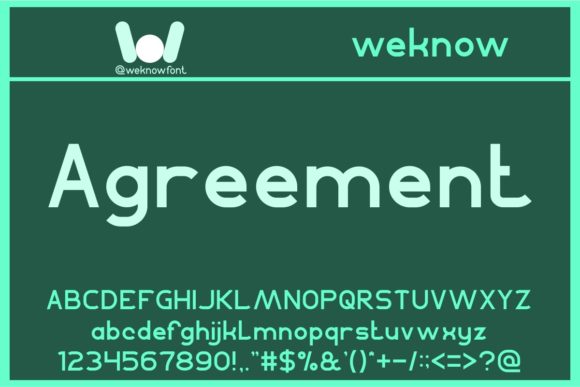
Agreement: The Clean Display Font for Modern Brands
There's a moment in every creative project where you realize the typography isn't just holding the words—it's setting the entire mood. I've been there, scrolling through endless font libraries, searching for something that feels crisp without being cold, modern without being trendy, and versatile enough to carry a brand from a business card to a billboard. That search often ends when you find a typeface that simply works. Agreement is a basic and clean display font designed for exactly that purpose. It’s the kind of typeface that doesn’t shout for attention but instead gives your message a clear, confident voice.
A Typeface Built for Clarity and Impact
At its core, Agreement is about straightforward communication. Its letterforms are constructed with a balanced geometric sensibility, avoiding unnecessary flourishes in favor of clean lines and open counters. This makes it exceptionally readable at larger sizes, which is exactly what you need from a display font. The characters have a uniform weight and consistent spacing that creates a harmonious rhythm on the page or screen. It feels contemporary and professional, making it a strong candidate for logos, headline font, and any application where first impressions are critical.
What makes it visually appealing is its restraint. In a market saturated with overly stylized typefaces, Agreement offers a breath of fresh air. It provides a solid foundation that can adapt to various tones—from corporate and trustworthy to creative and approachable—depending on how you use it. Think of it as a well-tailored suit: it looks sharp and intentional without distracting from the person wearing it. This quality makes it a valuable asset in your design toolkit, especially for projects requiring a premium font that balances personality with professionalism.
Where Agreement Truly Shines: Practical Applications
Let’s get specific. Where would you actually use a font like this? Its clean display nature makes it incredibly versatile. For brand identity and corporate identity, it can form the backbone of a visual system, ensuring consistency across stationery, presentations, and digital platforms. Imagine it on a tech startup’s website or a boutique consultancy’s letterhead—it conveys stability and clarity.
In the apparel industry and poster design, its legibility at scale is a major advantage. Whether it’s a tagline on a t-shirt or the main act on a concert poster, Agreement ensures the message is seen and understood from a distance. For music, movie, and game artwork, it can provide a clean, modern counterpoint to more illustrative elements, helping to ground the design.
Content creators and marketers will find it indispensable for social media graphics. Its clarity translates perfectly to Instagram stories, YouTube thumbnails, and Facebook ads where text needs to be absorbed quickly. It works beautifully for website headers and blog titles, offering a professional polish that enhances credibility. Even for print materials like magazine layouts, book covers, or comic and cartoon titles, it provides a clean, readable option that won’t compete with imagery.
Making It Work for Your Project
Choosing a font is one thing; using it effectively is another. Here’s some practical advice for integrating Agreement into your workflow.
- Start with Your Goal: Are you aiming for authority, creativity, or approachability? Agreement’s neutral style can be steered by your color choices, layout, and accompanying fonts. For a more corporate feel, pair it with a classic serif font. For a creative project, try it alongside a subtle handwritten font or a script font for contrast.
- Test Font Pairings Relentlessly: Never use a display font in isolation. Place Agreement in the context of your body copy. Does it complement a sans serif font like Open Sans or a serif font like Merriweather? The goal is harmony, not competition. Create a mockup and step back—does the hierarchy feel natural?
- Respect Readability: While it’s a display font, always consider the viewing environment. Use it for headlines and short bursts of text. For longer paragraphs, switch to a highly readable body font. Test its legibility at the sizes you plan to use, especially on mobile screens.
- Explore the Included Styles: A good premium font often comes with multiple weights and styles. Check what’s included with Agreement. Having a range from Light to Bold, or perhaps an italic, gives you flexibility to create emphasis and hierarchy within your designs without introducing a new typeface.
- Consider Licensing Early: If this is for a commercial project—a client’s logo, a product for sale, or a monetized YouTube channel—ensure you have the correct commercial license. This is a non-negotiable step for professional work and protects both you and your client.
Elevating Your Visual Communication
The right typography does more than just spell out words; it builds brand recognition and ensures visual consistency. Using Agreement as a core component of your design assets can streamline your creative process. You establish a recognizable typographic voice that audiences begin to associate with your brand or project. This consistency across your packaging design, web design, and editorial design materials makes your work look more polished and intentional, which in turn boosts professional presentation and can even increase audience engagement.
Ultimately, Agreement is a tool. It’s a clean, modern typography choice that solves a common design problem: the need for a reliable, good-looking display typeface that doesn’t get in the way. It’s for the small business owner crafting their first brand identity, the content creator designing eye-catching social media graphics, and the designer looking for a solid creative font for a variety of applications. Its strength lies in its simplicity and adaptability, making it a worthy consideration for your next project where clarity and style need to go hand in hand.